Well guys, this semester is finally over and this will be the last y'all will ever hear from me...lol ;)
Anyways, this read is just over how this semester of class has shown me how psychology really does have affects on my life. So basically it's an overview of what we have learned and how we applied it over the past couple of months :)
Let me start with Module 1 which was weeks 1 & 2. During these two weeks, we wrote 2 blogs which one was over ourself and the other was over a branch of psychology that sparked our interest. Obviously the first blog being about ourself was hands down probably the easiest, but on the flip side very hard because I had never blogged in my life before. Once I started writing, I found it really easy to just sit down and speak my mind because not having to worry about having to follow certain criteria helped a bunch. Now when we had to comment on other classmates blogs, thats where it got tricky. Of course no one wants to go and comment on a stranger's blog then see them the next day in class... but ya know that changed real quick ;) The blog we wrote during week 2, we were able to choose a branch of psychology that interested us the most. I decided to choose clinical psychology which I definitely did some research and y'all can go read that blog here and knock yourselves out ;) You'll see in that blog I talk about Kay Redfield Jamison and how she helped many people with bipolar disorder, which really just amazed me considering she was working and doing research over her own disorder. Writing that blog really opened my eyes to see how it will help me in the future.
Now we get into module 2 which contains weeks 3 &4 which is all about brain, sensation, and perception. We had a couple of choices to choose from, so I chose the experiment that had to do with brain stimuli and I had my friend Malia test it out. You can go and watch the video here and laugh all you want because its actually pretty funny...lol. In these two weeks, they included how the brain works and behaved which was one of my blog's topic and it mainly talked about neuroplasticity and how the two videos I watched incorporated that topic. In there I talked about Dr. Laura Boyd's Tedx Talk and how long and short term effects on the brain work. The video over Nico and Brooke that Dr. Selvaraj provided for us was amazing. I thought it was truly moving to see that two boys both lived without half a brain and how they still functioned. For week 4, I wrote my blog all about optical illusions and the whole blue/black versus white/gold dress phenomenon, which of course just messed with my brain but I definitely see blue and black ;) While reading up on this craze, the quote from neuroscientist Jay Neitz really stuck out to me because he studied individual color difference in vision for 30 years and the dress picture was the biggest individual difference he had ever seen.
On to module 3 containing weeks 5 & 6 on the topics of developmental psychology and personality. Our task for M3 was another one where we had a couple options to choose from and I chose telling my story from past, present, to the future. Through this task, I made a poster board (or for some of you know, not actual poster board ;). It was over how my life has been in the past, now in the present, and how I want my future to look through applying developmental psychology. We talked about human development and personality and the psychological side of things effects these aspects. In my blog called human growth and development, I watched the TedTalk by Pediatrician Nadine Burke Harris and how drama can affect a child and their health growing up. I really enjoyed watching this talk specifically because it really hit home. I realized that I am so grateful for the woman I get to call my mom and just noticing how strong she is, is purely awesome. In the personality aspect, we had talked in class about how everyone has a different personality and how it can really affect the person you are and the person you become. So I wrote my blog over how I took a personality test and see if it really reflected on my personality at hand. I found this very interesting and scary to know how accurate the Big Five Factor actually is. The questions from the Big Five Factor truly hits you in spots that you wouldn't think about normally and it highly reflects on your scores, which you can see my scores in my personality blog :)
This takes us to module 4 with weeks 7 & 8 over learning and memory. Our task for this week was either over an activity to demo the behavior of learning or the behavior of memory, my task that I did in my blog was over false memories and how individuals do that. Like I said before, we talked about learning, I used the chapter 6 that Dr. Selvaraj provided for us and focused a lot on classical conditioning. I found this topic to be quite intriguing and the man that was behind it all is Ivan Pavlov. He used a dog for his example on how he conditioned the dog to respond a certain way. We also discussed memory and how we tend to not realize how intricate our brain and our memory system is. I found it very cool that a person can create false memories without even realizing it. In my task blog, I showed how my friend created a false memory by writing down a word that wasn't said but she made that word fit into that category because of its relevance. This task truly amazed me. Another thing I found interesting was that in our implicit memory we have a system and not always will we remember certain things because of our span of time we have to actually fully remember things. So one of my classmates, Madelyn Dowell (you can check her blog out by clicking on her name), her blog for this week really stuck out to me when I wanted to go in and make my comments. She did her experiment over how much use of technology and social media get out of her each day and basically trained herself like Ivan Pavlov did to the dog. She trained herself to stay more off her phone or she had the consequence of putting a quarter in a jar. I think it was a very well-thought out blog and truly was a pretty awesome read.
For module 5, we had weeks 10 & 11 and those were over motivations, emotions, & social psychology. For our task, I had to write a blog over a story that really stuck out to me and inspired me whether it be about me, a close friend, or even over a therapist that really made a difference in my life. I wrote mine over my close friend who I called Janie, she struggled with depression and didn’t know how she could move on from it. She went years with this disorder and thought about unthinkable things along with doing them too. Though to keep it short, she was introduced to our Father and she clinged to him with everything she had left and to this day, she is one Jesus loving girl who is thankful to still be here, which this truly inspired me. When we met in class that week for discussions, we talked about the emotional side of psychology and the three different types of Theories of Emotion. I bring this up because I believe that these theories are kind of one in the same, but the one that makes the most sense to me would definitely have to be the James-Lange Theory; stimulus→ arousal→ emotion. Although I did miss the discussion over social psychology, I went and read the powerpoint given by Dr. Selvaraj and found some things that really make sense to me. Social cognition really struck my attention because its crazy how we are quick to make snap judgements about people ad how we think about how people interpret us and others. Another thing in social psychology that stuck out to me was that forming impressions is a big thing especially our non verbal ones such as, facial expressions, tone, and gestures - body language says A LOT! When going in to comment, I noticed that John's blog really spoke to me. He bragged on and on about how wonderful and inspiring his mom is and after reading his blog about her, it really just moved me. I aspire to be as great as that woman for my kids and really hope that my kids are that proud of me.
This brings me to module 6 with weeks 12 & 13 over psychological disorders and therapy. In our experimental task for the weeks we had to write this blog over how psychological disorders have affect people and for my blog I chose to interview two people who are close to my heart and I compared their disorders together. I chose my dear friend and my grandfather, both of them struggled and still do struggle with substance abuse. I found out that my grandfather and my friend had a whole lot in common with how they found their way and how their struggles were. Within the lectures we had in class, we talked pretty in depth about the different disorders like anxiety, bipolar, and depression. We got to take little tests in class to see if we could simply diagnose ourselves with GAD or depression. In class, Dr. Selvaraj passed out a simple little anxiety test to see and kind of diagnose ourselves. After taking it, yes maybe it might have not been as accurate as a normal testing for anxiety would be, but I did notice that I might have a moderate case of GAD. Now this doesn't really surprise me because I am a pretty anxious person. A fact that was in the powerpoint from that week that stood out to me was that about 300 million are affected by depression and women are double the amount of those who are men. Reading everyone’s blogs for this task was quite the read. Just seeing that everyone has someone or something in their life that is going on. This task really made me realize how grateful I am for the people in my life and really appreciative of people
Finally we had module 7 for weeks 14 & 15 which covered positive psychology. In this module task, we had quite a few choices to choose from on what we exactly wanted to do for this experimental blog; for this blog I chose to write three good things that happened in my day over a course of seven days. Let me tell ya, this really opened my eyes to seeing the good in each day over the negatives. In our class discussion over this topic, the New Theory of Well-Being really stuck out to me, it has the acronym PERMA which stands for Positive emotions, Engagement, positive Relationships, Meaning, and Accomplishment. Knowing that this is something that you can really follow is truly awesome because it can really just boost your confidence way up. During this week, the group had a task for us to go around campus and spread around positive psychology. This activity was actually really fun and just seeing the pure enjoyment on peoples faces was probably the best part. My group got to go around and hand out candy to anyone and everything while handing out compliments. This really made me feel super good inside because not only were we doing it because it was assigned to us, but we did it out of the kindness of our hearts. Dr. Selvaraj also this week made us write out what we would consider a beautiful day. Now writing it out really opened my mind to see how beautiful that day would necessarily be. I really enjoyed that activity because it actually kind of helped my mentality that week and bettered myself, also you can go read this blog here if ya haven't already ;)
So overall, this has been such a great semester and I have loved just being able to share my stories with y'all and have y'all be apart of it. This class really showed me how psychology can really play a key role in everyday life whether it be good or bad.
Well that's all I have for y'all. I hope enjoyed the reads and hope the best fro everyone :)
xoxo, court ;)
Monday, May 7, 2018

Wednesday, April 25, 2018
M7 :)
Hey guys :)
For this task blog I did the 3 good things over a period of 7 days. So basically at the end of each day, I wrote down 3 good things that happened to me or around me and I'll talk about why I think those certain things happened and how it made me feel. I also took some pictures every couple of days of the good things that happened to me.
Day 1 04/18/18
Today is my first day writing my three good things that happened during the day.
1. My suite mate bought me ice-cream which I thought was super sweet and I think she did that out of love and just out of the kindness of her heart
2. Dr. Selveraj sent us out a little morning thing through canvas just hoping for us to have a beautiful day which really made me smile. I think she did that since like we are starting this whole positive psychology and she wanted to show us some positivity :)
3. I slept and woke up very energized this morning and it made my day feel a little better than usual, I think it happened just so that I would enjoy the day a little more.
Day 2 04/19/18
1. I had a great talk with my friend and he really helped me. I think he did this because of the way he cares for me and my well-being
2. I hung out with my boyfriend which always puts me in a great mood so I think that happened just because it's my boyfriend and I always see him.
3. I got to go and babysit my favorite little kiddos which was so relieving. I think this happened because God knew I needed a break from everything.
Day 3 04/20/18
1. I woke up fully energized which was awesome so I definitely felt blessed by that and I think the reason being is because it was Friday
2. I didn't stress about homework at all which was a relief and I think that was because it was Friday too
3. I got to spend the entire rest of the day and night with my boyfriend which was so nice and I think that happened just because again it was Friday :)
Day 4 04/21/18
1. I got to sleep in and this was the best thing ever and I think that happened just because why not
2. I got to witness a double rainbow which was so cool and that obviously happened because of the rain
3. I got to just spend the day with one of my best friend's doggos and I absolutely loved it. Ace is freakin the cutest and my boyfriend and I got snow cones and shared with him :)
Day 5 04/22/18
1. I talked to my mom on the phone for a good while which was super great and I think that really help my stress and anxiety kind of calm down for awhile just because she knows how I am and how I get
2. I went to bed at SUCH an early time aka 9pm. yeah guys that was some great sleep so that happened because it was much needed and much appreciated
3. my boyfriend bought me dinner and probably because he likes me or somethin ;)
Day 6 04/23/18
1. I actually understood trig today which was awesome - I normally do understand but today was something different and it all just came to me
2. I figured out where I'm going this incoming fall semester so new things and new adventures so that was a huge relief on my part
3. Our hall had free canes so duh awesome day because free food and that just rocked
Day 7 04/24/18
1. So today was the first day all of freshman year that I didn't have an 8am so hallelujah that was super great
2. I got to catch up on watching my shows on netflix because no more chemistry homework which was very relaxing
3. I cleaned my room which I really enjoyed because that was a disasterrrr :)
So after sitting here and really thinking about how great my days were and what the best parts about them were really made me sit here and think about how happy I actually am. Recently, I haven't felt like myself and felt kind of not fully present and once writing about these and seeing the fullness to each day, it made me see the good and realize that everything around me is temporary. I actually really enjoyed the blog and I hope y'all did too :)
xoxo, court ;)
For this task blog I did the 3 good things over a period of 7 days. So basically at the end of each day, I wrote down 3 good things that happened to me or around me and I'll talk about why I think those certain things happened and how it made me feel. I also took some pictures every couple of days of the good things that happened to me.
Day 1 04/18/18
Today is my first day writing my three good things that happened during the day.
1. My suite mate bought me ice-cream which I thought was super sweet and I think she did that out of love and just out of the kindness of her heart
2. Dr. Selveraj sent us out a little morning thing through canvas just hoping for us to have a beautiful day which really made me smile. I think she did that since like we are starting this whole positive psychology and she wanted to show us some positivity :)
3. I slept and woke up very energized this morning and it made my day feel a little better than usual, I think it happened just so that I would enjoy the day a little more.
Day 2 04/19/18
1. I had a great talk with my friend and he really helped me. I think he did this because of the way he cares for me and my well-being
2. I hung out with my boyfriend which always puts me in a great mood so I think that happened just because it's my boyfriend and I always see him.
3. I got to go and babysit my favorite little kiddos which was so relieving. I think this happened because God knew I needed a break from everything.
Day 3 04/20/18
1. I woke up fully energized which was awesome so I definitely felt blessed by that and I think the reason being is because it was Friday
2. I didn't stress about homework at all which was a relief and I think that was because it was Friday too
 |
| this is ace or acey baby or acers and he's the sweetest most goodest boy ever and this is him with his snow cone :) |
Day 4 04/21/18
1. I got to sleep in and this was the best thing ever and I think that happened just because why not
2. I got to witness a double rainbow which was so cool and that obviously happened because of the rain
3. I got to just spend the day with one of my best friend's doggos and I absolutely loved it. Ace is freakin the cutest and my boyfriend and I got snow cones and shared with him :)
Day 5 04/22/18
1. I talked to my mom on the phone for a good while which was super great and I think that really help my stress and anxiety kind of calm down for awhile just because she knows how I am and how I get
2. I went to bed at SUCH an early time aka 9pm. yeah guys that was some great sleep so that happened because it was much needed and much appreciated
3. my boyfriend bought me dinner and probably because he likes me or somethin ;)
Day 6 04/23/18
1. I actually understood trig today which was awesome - I normally do understand but today was something different and it all just came to me
2. I figured out where I'm going this incoming fall semester so new things and new adventures so that was a huge relief on my part
3. Our hall had free canes so duh awesome day because free food and that just rocked
Day 7 04/24/18
1. So today was the first day all of freshman year that I didn't have an 8am so hallelujah that was super great
2. I got to catch up on watching my shows on netflix because no more chemistry homework which was very relaxing
3. I cleaned my room which I really enjoyed because that was a disasterrrr :)
So after sitting here and really thinking about how great my days were and what the best parts about them were really made me sit here and think about how happy I actually am. Recently, I haven't felt like myself and felt kind of not fully present and once writing about these and seeing the fullness to each day, it made me see the good and realize that everything around me is temporary. I actually really enjoyed the blog and I hope y'all did too :)
xoxo, court ;)
Monday, April 16, 2018
M6 :)
Hey everyone :)
This week I'm blogging about psychological disorders and how they have affected people and even the ones who are very close to me. So I interviewed two people who just happened to be a close friend and my grandfather. So y'all are probably wondering why I chose them and its specifically for the reason that they both have suffered and still currently struggling with substance abuse. Now when I asked them separately if they'd let me record or video this, they were highly against it and my friend wants their name disclosed for personal reasonings. So hope y'all can bare with me here :)
So my first interview was with my grandfather. He's the dad to my dad and actually quite wonderful. Well I found about a couple of years ago that he actually was an alcoholic. When I was told this, I was completely shocked and couldn't even imagine it. Now since we are doing psychological disorders this week, I decided to give him a call. So after awhile of us catching up, I finally cut to the chase and laid it on him. I asked him what it was like to be an alcoholic and how did he know. He told me he had no idea that he was one until he knew. Now of course that doesn't make sense, but to him it did. He told me about how he's worked in the banking business long before I was born. He and a couple of his buddies would drink on the job but not too much. Then after work, when he told me he had felt pretty good, he'd go to the bar. Drink and drink until it was supper time, he would sit there. Sometimes he said he'd drink through dinner and leave my grandmother worried sick, but he said he knew he was fine and could easily drive home. Which in fact, he did. He told me he kept this up for at least 15-20 years. My grandmother hated it is what he said. She would eventually just give up and not even think to stay up and wait for him anymore. He told me that when she didn't wait up for him that he'd come in drunk and find even more alcohol in the house and drink it until he passed out. She put up with this for that long and he told me the reason why he decided to get help. He told me this, "It wasn't because of grandma, or your dad, or your uncles, but because of your mother I went to rehab". My first thought when he said that was why, why did she change your mind? I asked him that too and he said it was because she told him that if he kept it up, he'd never meet his first granddaughter. He told me that in that moment he knew he was an alcoholic and that he needed help because having the relationship with me was for more important than anything else. Which honestly made me cry so kinda glad I didn't record this because y'all would see me bawling ;)
Anyways, after all of that, I asked him how rehab helped him and how he is coping with being an alcoholic now. He goes, "Have you ever realized that when we eat supper, I always have a glass of milk?" I instantly thought back to every meal I've had with them and saw the glass of milk there. "It's the one drink at dinner that doesn't remind me of the alcohol." Hearing him say that, I knew it hurt. I could hear it in his voice that he is not hurting because he misses it, but hurting because it reminds him of how he hurt others while doing it. He told me that living as an alcoholic was hard at first, but overcoming it was easily one of the best decisions he's ever made.
Now the second interview was over my close friend and since they don't want their name, I'll call them Matt. I met Matt earlier this school year and instantly he spilled out everything. He told me everything about his life and how he grew up, but I never knew how he was holding it together, little did I know, he really wasn't. I knew I could interview him because of everything he had told me before, so I asked him to sit with me and talk. I began to ask him how he knew he was addicted and what was hard. He told me that he began drinking and doing drugs around the age of seven, which is really young for starters. He felt ashamed when he told me that, but proceeded to tell me that that was all he knew. He was thrown into those types of households and situations until he was about 14. Doing drugs and drinking was normal to him. He told me it became and every day, multiple times a day sort of thing. Putting alcohol in drinks so that teachers could not tell just to get through the school day or crushing pills to mix into drinks to get by. "Anything that would make me feel good was what I wanted." When he said that, it made me realize that not everyone is such a happy person. He told me it followed him all the way to college. He said blacking out at the next party was the goal. I asked him when he realized he was an addict and this made his face turn completely soft, but blank. Matt said "I realized I was an addict when I felt like I was dying from drinking and taking too much." I asked him how and he said "I was scared that I'd never see my mom again and realized that doing these things was not what I really wanted." He told me that he found someone that began to help him, a girl in fact that helped him handle his situations. He said he wanted to go to church and figure out how to actually become apart of something that was bigger and better than those things behind him. He knew that living for his mom was worth so much more than taking pills or drinking. He told me he now goes to church and is trying to build a relationship with God and giving up those things was the best.
After interviewing both of them, I realized that there are so many people that are affected by the same things such as substance abuse. Knowing that my grandfather wasn't the only one or my friend was kind of eye opening in a way. Of course I figured that they weren't the only ones struggling, but hearing their stories really spoke to my heart. It also kind of makes me more careful to not get into those types of things and be more aware of what's going on around me.
xoxo, court :)
This week I'm blogging about psychological disorders and how they have affected people and even the ones who are very close to me. So I interviewed two people who just happened to be a close friend and my grandfather. So y'all are probably wondering why I chose them and its specifically for the reason that they both have suffered and still currently struggling with substance abuse. Now when I asked them separately if they'd let me record or video this, they were highly against it and my friend wants their name disclosed for personal reasonings. So hope y'all can bare with me here :)
So my first interview was with my grandfather. He's the dad to my dad and actually quite wonderful. Well I found about a couple of years ago that he actually was an alcoholic. When I was told this, I was completely shocked and couldn't even imagine it. Now since we are doing psychological disorders this week, I decided to give him a call. So after awhile of us catching up, I finally cut to the chase and laid it on him. I asked him what it was like to be an alcoholic and how did he know. He told me he had no idea that he was one until he knew. Now of course that doesn't make sense, but to him it did. He told me about how he's worked in the banking business long before I was born. He and a couple of his buddies would drink on the job but not too much. Then after work, when he told me he had felt pretty good, he'd go to the bar. Drink and drink until it was supper time, he would sit there. Sometimes he said he'd drink through dinner and leave my grandmother worried sick, but he said he knew he was fine and could easily drive home. Which in fact, he did. He told me he kept this up for at least 15-20 years. My grandmother hated it is what he said. She would eventually just give up and not even think to stay up and wait for him anymore. He told me that when she didn't wait up for him that he'd come in drunk and find even more alcohol in the house and drink it until he passed out. She put up with this for that long and he told me the reason why he decided to get help. He told me this, "It wasn't because of grandma, or your dad, or your uncles, but because of your mother I went to rehab". My first thought when he said that was why, why did she change your mind? I asked him that too and he said it was because she told him that if he kept it up, he'd never meet his first granddaughter. He told me that in that moment he knew he was an alcoholic and that he needed help because having the relationship with me was for more important than anything else. Which honestly made me cry so kinda glad I didn't record this because y'all would see me bawling ;)
Anyways, after all of that, I asked him how rehab helped him and how he is coping with being an alcoholic now. He goes, "Have you ever realized that when we eat supper, I always have a glass of milk?" I instantly thought back to every meal I've had with them and saw the glass of milk there. "It's the one drink at dinner that doesn't remind me of the alcohol." Hearing him say that, I knew it hurt. I could hear it in his voice that he is not hurting because he misses it, but hurting because it reminds him of how he hurt others while doing it. He told me that living as an alcoholic was hard at first, but overcoming it was easily one of the best decisions he's ever made.
Now the second interview was over my close friend and since they don't want their name, I'll call them Matt. I met Matt earlier this school year and instantly he spilled out everything. He told me everything about his life and how he grew up, but I never knew how he was holding it together, little did I know, he really wasn't. I knew I could interview him because of everything he had told me before, so I asked him to sit with me and talk. I began to ask him how he knew he was addicted and what was hard. He told me that he began drinking and doing drugs around the age of seven, which is really young for starters. He felt ashamed when he told me that, but proceeded to tell me that that was all he knew. He was thrown into those types of households and situations until he was about 14. Doing drugs and drinking was normal to him. He told me it became and every day, multiple times a day sort of thing. Putting alcohol in drinks so that teachers could not tell just to get through the school day or crushing pills to mix into drinks to get by. "Anything that would make me feel good was what I wanted." When he said that, it made me realize that not everyone is such a happy person. He told me it followed him all the way to college. He said blacking out at the next party was the goal. I asked him when he realized he was an addict and this made his face turn completely soft, but blank. Matt said "I realized I was an addict when I felt like I was dying from drinking and taking too much." I asked him how and he said "I was scared that I'd never see my mom again and realized that doing these things was not what I really wanted." He told me that he found someone that began to help him, a girl in fact that helped him handle his situations. He said he wanted to go to church and figure out how to actually become apart of something that was bigger and better than those things behind him. He knew that living for his mom was worth so much more than taking pills or drinking. He told me he now goes to church and is trying to build a relationship with God and giving up those things was the best.
After interviewing both of them, I realized that there are so many people that are affected by the same things such as substance abuse. Knowing that my grandfather wasn't the only one or my friend was kind of eye opening in a way. Of course I figured that they weren't the only ones struggling, but hearing their stories really spoke to my heart. It also kind of makes me more careful to not get into those types of things and be more aware of what's going on around me.
xoxo, court :)
Monday, April 2, 2018
M5 :)
Hey guys :)
So this week I have a new blog over something really close to my heart and I hope maybe it'll speak to y'all. It is over a very close friend of mine, but for personal reasonings we are going to call this person Janie. Let me start with some background on good ole Janie.
So Janie grew up in a household of her parents and two other siblings. Now her home life experience was not the greatest and it made her childhood rough. She grew up in a bad area in a big city where lots of things happened that not little children should see. She went to school like everyone else and learned, but no one seemed to notice the bruises or welts. No one could see them... She hated going home and it made it hard for her to grow up in that household. Being the oldest, she took the hits for her siblings.
At first Janie thought she had done something wrong and she was upset by it... Though it seemed to happen all the time and she eventually got use to it. She knew when it was time for another lick. By the age of 13, Janie was in middle school and she found it really easy to bully kids. She felt as though if she could show others how she was feeling by hurting them, they would know to help her and see that she had it bad too. That was not the case. She found herself in lots of trouble in school, which in return made it even worse at home.
Janie eventually became depressed. She felt as though she had turned off her emotions for good. She didn't know how to love or how to be loved. Her siblings were too young to even know what was happening, let alone her parents didn't care. She felt so alone in the world that doing drugs and drinking were her only escape and her only way to actually feel something. Dating boys in high school was rough. She didn't know what it was like to not get hit so she found herself in every abusive relationship possible...
Now you're probably wondering how the heck no one knows or where Janie's friends were and the answer to those questions is this. Janie did not tell anyone. She had girlfriends that she would hangout with and laugh with, but no one knew it was all a show... Not to get y'all lost, Janie eventually got old enough to stick up for herself and was not hit anymore by about age 14, but that damage did her good. Also with dating those boys throughout high school, she still did not know what love was and she eventually thought it out that she'd be alone the rest of her life.
When high school ended, Janie was so ready to leave and go to college. Finally just get out of her house and start back up on her old ways, or at least thats what she thought. Her first semester, she went out at least three times a week to just completely messed up. She just wanted to feel something because love was not an option for her. Drugs were for sure her go to when she was upset. She was so caught up in drugs, she didn't even realize what was going on around her.
It was second semester that opened her eyes. She was going through the motions of first semester as soon as she got back, but something caught her eye for the first time in a long time. A boy. A warm-hearted, Jesus loving boy that was ready to love a girl like no other. Now Janie didn't know that when she saw him, but she soon found out. This boy went out of his way to show Janie what it meant to be loved. He asked her to church and Janie had no desire to go, but since it was just another boy to her at the time, she said sure.
Janie experienced church for the first time with an open heart and felt the love of our Lord. This boy opened her to this mind-boggling figure. Janie finally felt without the drugs. She realized what it was like to actually be full. The power of Jesus Christ had fulfilled her. She decided that day that she was going to accept the Lord into her heart and move on from the drugs.
That boy that happened to be at the right place at the right time saved Janie and I honestly have no clue where that girl would be without him. Janie is now married with two kids and living her best life with that boy that showed her Jesus and for that I am forever grateful.
xoxo, court ;)
#psychstory
So this week I have a new blog over something really close to my heart and I hope maybe it'll speak to y'all. It is over a very close friend of mine, but for personal reasonings we are going to call this person Janie. Let me start with some background on good ole Janie.
So Janie grew up in a household of her parents and two other siblings. Now her home life experience was not the greatest and it made her childhood rough. She grew up in a bad area in a big city where lots of things happened that not little children should see. She went to school like everyone else and learned, but no one seemed to notice the bruises or welts. No one could see them... She hated going home and it made it hard for her to grow up in that household. Being the oldest, she took the hits for her siblings.
At first Janie thought she had done something wrong and she was upset by it... Though it seemed to happen all the time and she eventually got use to it. She knew when it was time for another lick. By the age of 13, Janie was in middle school and she found it really easy to bully kids. She felt as though if she could show others how she was feeling by hurting them, they would know to help her and see that she had it bad too. That was not the case. She found herself in lots of trouble in school, which in return made it even worse at home.
Janie eventually became depressed. She felt as though she had turned off her emotions for good. She didn't know how to love or how to be loved. Her siblings were too young to even know what was happening, let alone her parents didn't care. She felt so alone in the world that doing drugs and drinking were her only escape and her only way to actually feel something. Dating boys in high school was rough. She didn't know what it was like to not get hit so she found herself in every abusive relationship possible...
Now you're probably wondering how the heck no one knows or where Janie's friends were and the answer to those questions is this. Janie did not tell anyone. She had girlfriends that she would hangout with and laugh with, but no one knew it was all a show... Not to get y'all lost, Janie eventually got old enough to stick up for herself and was not hit anymore by about age 14, but that damage did her good. Also with dating those boys throughout high school, she still did not know what love was and she eventually thought it out that she'd be alone the rest of her life.
When high school ended, Janie was so ready to leave and go to college. Finally just get out of her house and start back up on her old ways, or at least thats what she thought. Her first semester, she went out at least three times a week to just completely messed up. She just wanted to feel something because love was not an option for her. Drugs were for sure her go to when she was upset. She was so caught up in drugs, she didn't even realize what was going on around her.
It was second semester that opened her eyes. She was going through the motions of first semester as soon as she got back, but something caught her eye for the first time in a long time. A boy. A warm-hearted, Jesus loving boy that was ready to love a girl like no other. Now Janie didn't know that when she saw him, but she soon found out. This boy went out of his way to show Janie what it meant to be loved. He asked her to church and Janie had no desire to go, but since it was just another boy to her at the time, she said sure.
Janie experienced church for the first time with an open heart and felt the love of our Lord. This boy opened her to this mind-boggling figure. Janie finally felt without the drugs. She realized what it was like to actually be full. The power of Jesus Christ had fulfilled her. She decided that day that she was going to accept the Lord into her heart and move on from the drugs.
That boy that happened to be at the right place at the right time saved Janie and I honestly have no clue where that girl would be without him. Janie is now married with two kids and living her best life with that boy that showed her Jesus and for that I am forever grateful.
xoxo, court ;)
#psychstory
Saturday, March 10, 2018
experimentin pt 3 ;)
Hey everyone! So this is the blog I mentioned in the previous post about how I was going to demonstrate an experiment over memory. Now I'll basically give y'all a detailed write up of how my experiment went. :)
So my experiment was dealing with how people can create false memories even in short amounts of time. I took my friend Paige and asked her to listen to me as I read a list of words aloud to her. I told her to remember as much as she could so that once I was done, she could write down the ones that she did actually remember. I read the following words to her;
- thread
- pin
- eye
- injection
- syringe
- sewing
- sharp
- point
- hurt
- knitting
- prick
- thimble
- haystack
- pain
- thimble
- haystack
- pin
- eye
- sharp
- needle
I found it quite interesting by the words that she remembered. If y'all noticed, Paige wrote down the word "needle" which was not on the list. Kinda funny right? She formed what I mentioned before, a false memory. Her brain had words thrown at it and a general similarity of words could definitely by "needle".
I then asked her to do the same exact thing except this time with a long list of words;
- bed
- drowse
- awake
- nurse
- tired
- sick
- dream
- lawyer
- wake
- medicine
- snooze
- health
- snore
- hospital
- rest
- dentist
- blanket
- physician
- doze
- patient
- stethoscope
- slumber
- peace
- yawn
- surgeon
- drowse
- bed
- awake
- snooze
- wake
- clinic
- hospital
- nurse
- stethoscope
I then proceeded to ask Paige if she had written down the word "aardvark" and she definitely looked at me like what the heck Courtney. Then I asked her if she wrote down either of the words "doctor" or "sleep" to see if she again formed a false memory. This time she didn't which I think is partly because there was twice the amount of words in the second list than the first list.
Now we looked to see if she had written down either of the following words,
- pain (last item)
- thread (first item)
- sharp (middle item)
- point (middle item)
Overall, Paige definitely found this task to be challenging because when you listen to a list, you try and start to remember but then you feel as though you get messed up trying to remember as they keep telling you words. I also did attempt this task and found it a lot more challenging than it seemed.
xoxo, court ;)
Monday, March 5, 2018
memory :)
Hey guys! So I'm comin at ya early for next week because I'll be in the middle of the ocean and actually have something due during spring break.... :) So this is over memory and how the brain processes the two different types. So basically memory is our ability of encode, retain, recall, and store information and past experiences in the human brain (The Human Memory). Now like I said before, there are two different types of memories, explicit and implicit but with three different stages, short term, long term, and sensory.

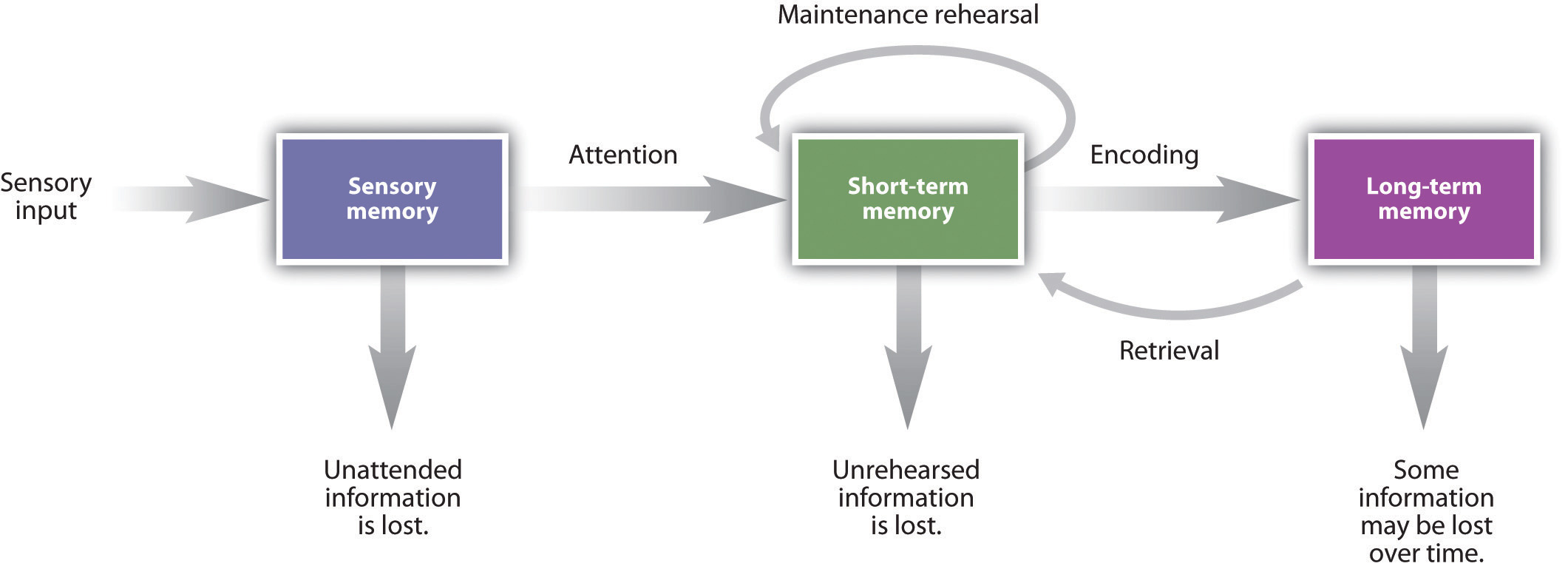
Explicit memory refers to the knowledge or experiences that can be remembered and with this type comes with two types within explicit. There is episodic which is firsthand experiences we have had and there's semantic which is our knowledge of facts and concepts about the world. Now you're probably at this point like what the heck does that mean. So an example of both would be your high school graduation day or maybe your big 18th birthday would be a prime example of episodic and then simply knowing that 2 plus 2 is 4 or that the library has books within it.
Implicit memory refers to the influence of experience on behavior, even if the individual is not aware of those influences and of course there are three different types of implicit memory, procedural, classical conditioning effects, and priming. Procedural memory is based on our often unexplainable knowledge of how to do things. For example, when we walk around, eat, or play video games, that's an example of procedural memory because it allows us to perform complex tasks even if we can't explain to others how we are doing it. There's no way to really teach someone how to walk other than just learning to actually do it. The second type I listed was classical conditioning which was what my last blog was over. It is demonstrated when a conditioned stimulus begins to create the same response as the unconditioned stimulus did before learning. Finally the last one listed is priming which is changes in behavior as a result of experiences that have happened frequently or recently. So an example of priming would be knowing the concept of kindness by presenting people with words that correlate with that and then people who are primed with the concept tend to act more kind. I'm not sure if that made sense to y'all, but feel free to look up some more on that ;)
Now like I said in the beginning, there are different stages of memory: sensory, short-term, and long-term memory. Basically when developing a memory it goes through these stages, but not always do all the things you retain make it through all three stages.
Sensory memory is the brief storage and it only last for a very, very short period of time before it is passed on for more processing if it's not already forgotten. Most of the time, the information that goes into sensory memory is forgotten, but when we actually sit here and pay attention to some of the information and really try to remember it, it passes into short-term memory (STM). STM is the place where small amounts of information can be temporarily kept longer than sensory memory but not any longer than a minute. So a common an example that most people would think of when thinking about short-term memory would be Dory from Finding Nemo. She suffers from short-term memory loss as most of y'all probably know...lol :) Now last but not least, there's long-term memory. In order for this to be retained into memories, we have to want to remember by encoding and storing and then retrieving.
So with this blog this week there's an experimental task and it's over the effects of creating a false memory. This blog I'll kind of give you a background of what exactly that means before my next post with the experiment. Many different psychologists have defined false memory so there isn't a very distinct definition, though there was one that I found pretty accurate in my opinion. M.K. Johnson said, "A false memory is a mental experience that is mistakenly taken to be a veridical representation of an event from one's personal past. Memories can be false in relatively minor ways and in major ways that have profound implications for oneself and others." So you're probably wondering what the heck causes anyone to falsify a memory. Factors that can falsify memories can include misinformation and misattribution of the original source of the information. Also, existing knowledge and other memories can interfere with the formation of a new memory, causing the recollection of an event to be mistaken of entirely false (VeryWellMind). In my experiment, I tested the memory of my friend Paige to see if she would falsify anything, but y'all will see those results in my next blog!
Well that's just about all I got on the mems so stay tuned for my experimental blog coming up ;)
xoxo, court :)
Sources ;)
Well that's just about all I got on the mems so stay tuned for my experimental blog coming up ;)
xoxo, court :)
Sources ;)
Mastin, Luke. “What Is Memory.” What Is Memory? - The Human Memory, Human-Memory.net, 2010, www.human-memory.net/intro_what.html.
Cherry, Kendra, and Steven Gans. “How Your Brain Can Create False Memories.” Verywell Mind, 18 May 2017, www.verywellmind.com/what-is-a-false-memory-2795193.
Cherry, Kendra, and Steven Gans. “How Your Brain Can Create False Memories.” Verywell Mind, 18 May 2017, www.verywellmind.com/what-is-a-false-memory-2795193.
learnin ;)
Hey y'all! So this week is all about learning and how our behavior is affected. First off, learning is the process by which life experience causes change in the behavior or
thinking of an organism (Chapter 6). There are lots of different ways that researchers have studied the behavior of learning and how it takes a role on the brain.
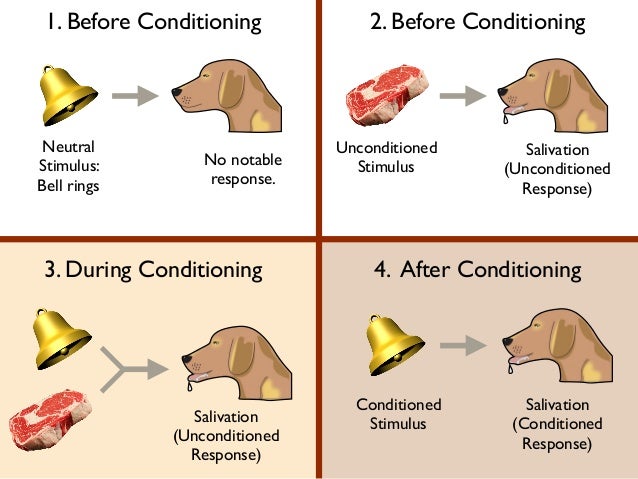 Ivan Pavlov focused on classical conditioning, a form of learning
in which animals or people make a connection between two stimuli that have occurred
together such that one predicts the other. So for example, Pavlov studied the anticipatory salivation in dogs. He first noticed the neutral stimulus which causes no response at all. He used a bell which demonstrated a neutral stimuli and it didn't create salvation from the dog. The next thing he found was the unconditioned stimulus which causes a response automatically without having to learn. In this instance, food is a natural biological reflex for salivation in dogs. The dog's salvation is called an unconditioned response because it happens naturally. Pavlov then paired these two conditions together and associated the bell with food to see if the dog would begin to salivate and it did. This turns the bell into a conditioned stimulus which now has a response of a conditioned response because this is acquired through learning. Now the dog will salivate to the ring of the bell because it learned from the conditioning that food is directly related to the ring.
Ivan Pavlov focused on classical conditioning, a form of learning
in which animals or people make a connection between two stimuli that have occurred
together such that one predicts the other. So for example, Pavlov studied the anticipatory salivation in dogs. He first noticed the neutral stimulus which causes no response at all. He used a bell which demonstrated a neutral stimuli and it didn't create salvation from the dog. The next thing he found was the unconditioned stimulus which causes a response automatically without having to learn. In this instance, food is a natural biological reflex for salivation in dogs. The dog's salvation is called an unconditioned response because it happens naturally. Pavlov then paired these two conditions together and associated the bell with food to see if the dog would begin to salivate and it did. This turns the bell into a conditioned stimulus which now has a response of a conditioned response because this is acquired through learning. Now the dog will salivate to the ring of the bell because it learned from the conditioning that food is directly related to the ring.
So something that really stuck out to me in this chapter would have to be the fact that classical conditioning can be used in treatment for physical disorders. The example in this chapter was individuals with serious allergies took an effective allergy drug and then quickly drank an unusual drink. So after drinking the drink several times with the allergy drug, it eventually coincided together. The doctor then just made the patients drink the unusual drink on its own and they directly related it back to their symptoms of their allergies. Now after the drink being a neutral stimulus, it was now a medical effect in these patients because of its learned association with the drug that had the effect. I think that this is important because when you directly correlated something with another it can either give you a bad memory or good memory.
A real world example that I have run across would actually be from a couple months ago. During our little ice break, my friends and I went up to San Antonio and on the drive back we passed Comanche and I really cringed and instantly was making sure I was going the speed limit. Now one weekend, my best friend Kourtney and I went up to College Station to visit her sister and whatnot. Well on the drive back I got a speeding ticket in Comanche. Therefore,
unconditioned stimulus: getting a speeding ticket
conditioned stimulus: seeing the Comanche sign
unconditioned response: cringing and negative feelings
conditioned response: going the speed limit and be cautious
Well thats all I got on learning and how a certain study came about. I hope y'all had fun or somethin like that while reading this ;)
xoxo, court :)
Sources :)
Chapter 6 - Psychology Book :)
Ivan Pavlov focused on classical conditioning, a form of learning
in which animals or people make a connection between two stimuli that have occurred
together such that one predicts the other. So for example, Pavlov studied the anticipatory salivation in dogs. He first noticed the neutral stimulus which causes no response at all. He used a bell which demonstrated a neutral stimuli and it didn't create salvation from the dog. The next thing he found was the unconditioned stimulus which causes a response automatically without having to learn. In this instance, food is a natural biological reflex for salivation in dogs. The dog's salvation is called an unconditioned response because it happens naturally. Pavlov then paired these two conditions together and associated the bell with food to see if the dog would begin to salivate and it did. This turns the bell into a conditioned stimulus which now has a response of a conditioned response because this is acquired through learning. Now the dog will salivate to the ring of the bell because it learned from the conditioning that food is directly related to the ring.So something that really stuck out to me in this chapter would have to be the fact that classical conditioning can be used in treatment for physical disorders. The example in this chapter was individuals with serious allergies took an effective allergy drug and then quickly drank an unusual drink. So after drinking the drink several times with the allergy drug, it eventually coincided together. The doctor then just made the patients drink the unusual drink on its own and they directly related it back to their symptoms of their allergies. Now after the drink being a neutral stimulus, it was now a medical effect in these patients because of its learned association with the drug that had the effect. I think that this is important because when you directly correlated something with another it can either give you a bad memory or good memory.
A real world example that I have run across would actually be from a couple months ago. During our little ice break, my friends and I went up to San Antonio and on the drive back we passed Comanche and I really cringed and instantly was making sure I was going the speed limit. Now one weekend, my best friend Kourtney and I went up to College Station to visit her sister and whatnot. Well on the drive back I got a speeding ticket in Comanche. Therefore,
unconditioned stimulus: getting a speeding ticket
conditioned stimulus: seeing the Comanche sign
unconditioned response: cringing and negative feelings
conditioned response: going the speed limit and be cautious
Well thats all I got on learning and how a certain study came about. I hope y'all had fun or somethin like that while reading this ;)
xoxo, court :)
Sources :)
Chapter 6 - Psychology Book :)
Subscribe to:
Posts (Atom)
-
Hey guys. So this week's blog is over human growth and development and I chose the TedTalk with Pediatrician Nadine Burke Harris over ho...
-
Hey guys :) So this week I have a new blog over something really close to my heart and I hope maybe it'll speak to y'all. It is ove...
-
Hey everyone! So this is the blog I mentioned in the previous post about how I was going to demonstrate an experiment over memory. Now I...
